

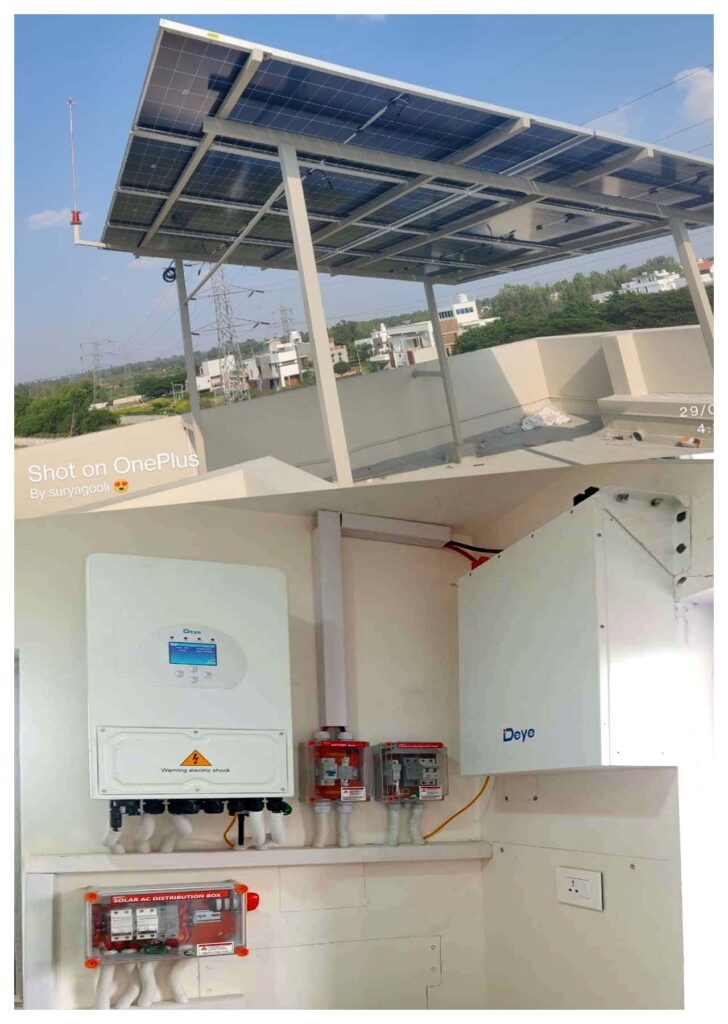
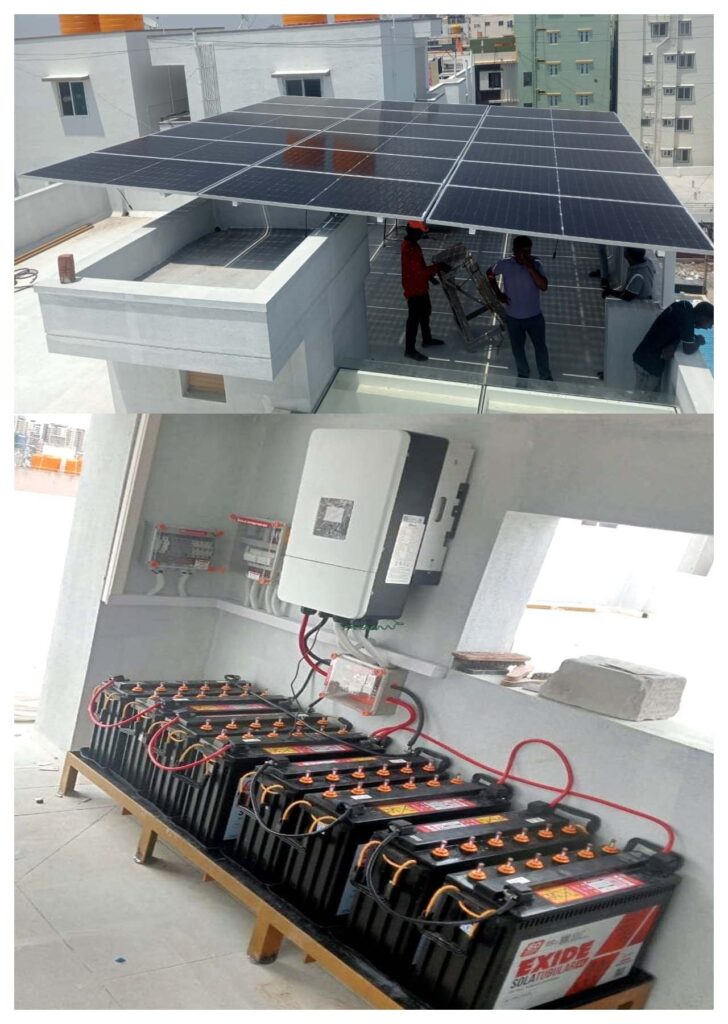
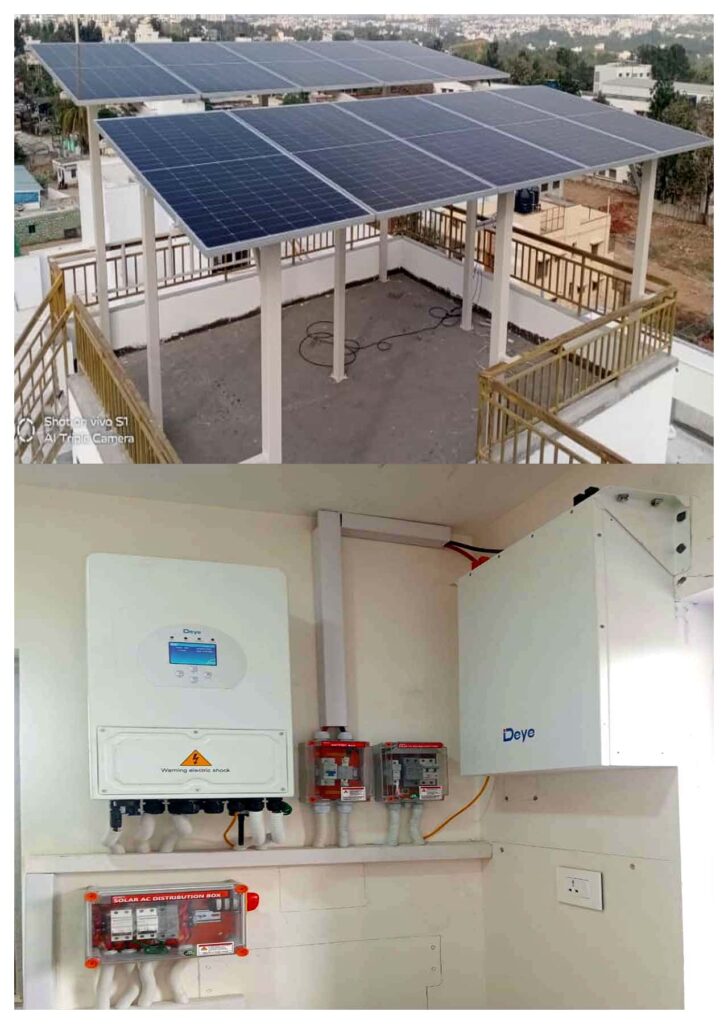

SOLAR HYBRID SYSTEM

WHAT IS HYBRID SOLAR SYSTEM?

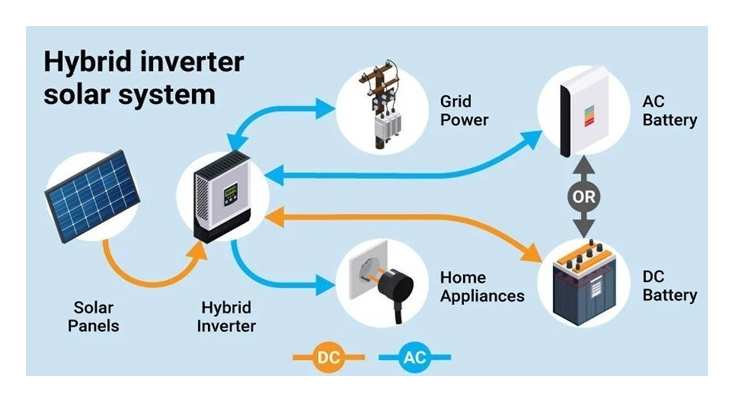
  • A Hybrid Solar System contains solar panels, a hybrid inverter, and battery storage to create an uninterrupted energy solution. The solar panels store sunlight and convert it into electricity, while the battery storage stores excess energy for later use.

    The functionality of this system starts from a Hybrid Solar Panel that helps to capture the sunlight and then convert it into DC (Direct Current) electricity. The DC electricity from the Hybrid Solar Panel is converted into AC (Alternating Current) with the help of an Inverter. Then the excess solar energy produced during the day is stored in a Battery Storage for use at night or on cloudy days for a continuous electricity supply. These systems combine the best features of grid-tied and off-grid solar systems, ensuring continuous solar power operation. When solar and battery energy are insufficient, then Grid Connection draws power from the grid and also exports excess energy to the grid. This way Hybrid Solar Systems can be used even during a blackout!

INTRODUCTION TO SOLAR POWER:

India is densely populated and has high solar insolation, an ideal combination for using solar power in India. Much of the country does not have an electrical grid, so one of the first applications of solar power has been for water pumping; to begin replacing India’s four to five million diesel powered water pumps, each consuming about 3.5 kilowatts, and off-grid lighting. Some large projects have been proposed, and a 35,000 km² area of the Thar Desert has been set aside for solar power projects, sufficient to generate 700 to 2100 Giga watts.

The Indian Solar Loan Programme, supported by the United Nations Environment Programme has won the prestigious Energy Globe World award for Sustainability for helping to establish a consumer financing program for solar home power systems. Over the span of three years more than 16,000 solar home systems have been financed through 2,000 bank branches, particularly in rural areas of South India where the electricity grid does not yet extend.

Announced in   November   2009,   the   Government   of   India   proposed  to  launch         its Jawaharlal Nehru National Solar Mission under the National Action Plan on Climate Change with plans to generate 1,000 MW of power by 2013 and up to 20,000 MW grid-based solar power, 2,000 MW of off-grid solar power and cover 20 million Sq meters with collectors by the end of the final phase of the mission in 2020.The Mission aims to achieve grid parity (electricity delivered at the same cost and quality as that delivered on the grid) by 2020.

Achieving this target would establish India as a global leader in solar power generation.

OBJECIVES OF THE SCHEME:

  • Acute power shortages in India are making most of the commercial and office establishments to have diesel generator backup. By setting up the grid interactive solar power plants on the rooftops would help in reducing the consumption of diesel during the day time in the areas where grid power is intermittent. If the grid power is continuous, the solar power generated will be utilized along with the grid power and the proportionate amount of grid power usage will get reduced. During minimum load periods (e.g. during weekends), the excess power generated from solar systems could be fed to grid. The consumer can be compensated for the exported power as per policy by the State. Connectivity of these projects to the grid also has to be in accordance with the prevailing CEA guidelines or policy by the State regulators/ DISCOMs.

PROJECTS